
Investing for Beginners: Little Money Strategies, Index Funds, IRA Choices, Passive Income, and Long-Term Growth
🚀 Starting Small: How to Invest with Just a Few Dollars
Welcome to the world of wealth building, where you don’t need a million dollars to get started. Many beginners feel paralyzed because they think investing is only for the wealthy, but micro-investing has changed the game entirely. By using apps that allow for fractional shares, you can own a piece of your favorite tech giants or retail stores for as little as $1. This strategy is perfect for consistent long-term growth because it removes the barrier to entry and encourages the habit of saving. Imagine turning your spare change from a morning coffee into a diversified portfolio that works for you while you sleep. The key here is consistency; even $20 a month can blossom into a significant nest egg over decades thanks to the magic of compounding interest. You should focus on automating these small contributions so that your ‘little money’ strategies become a background process in your life. Don’t wait for a windfall to start your journey; the best time to plant a tree was twenty years ago, and the second best time is today. By embracing this ‘start where you are’ mentality, you are setting the foundation for financial freedom. This approach ensures you learn the ropes without high stakes, making you more confident over time. Every giant oak tree started as a tiny acorn, and your financial portfolio is no different in its potential. By the time you finish reading this, you’ll see how even the smallest contributions pave the way for a rich future.

📈 The Easy Button: Why Index Funds are a Beginner’s Best Friend
If you’re looking for a stress-free way to grow your wealth, Index Funds are essentially the ‘easy button’ of the financial world. Instead of trying to pick the next ‘moon shot’ stock—which is statistically a losing game for most—index funds allow you to buy a tiny slice of hundreds of companies at once. This diversification acts as a safety net; if one company in the fund underperforms, the others are there to balance it out. Most experts recommend low-cost S&P 500 index funds because they track the performance of the largest 500 companies in the U.S. Historically, the market has returned an average of about 10% annually, which is far better than any savings account.
- Low Management Fees: You keep more of your gains.
- Instant Diversification: Reduced risk across sectors.
- Simplicity: No need to read balance sheets daily.
By investing in these funds, you are betting on the overall growth of the economy rather than a single CEO’s performance. It’s a passive income strategy that requires zero maintenance once you’ve set up your automatic buys. Over time, the reinvested dividends from these funds will accelerate your progress toward your financial goals. You don’t need to be a Wall Street whiz to understand that owning the whole market is smarter than gambling on one ticker. This method allows you to ignore the daily noise and focus on your long-term vision. It is the ultimate hands-off approach for someone who wants to live their life while their money works hard. Consistency in buying these funds is the secret sauce to becoming a millionaire over time.
🏦 Choosing Your Vault: Roth vs. Traditional IRA
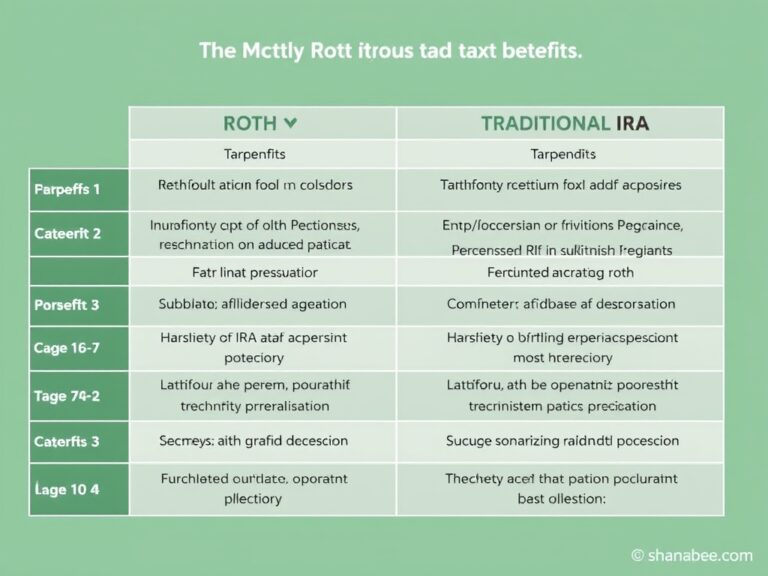
When it comes to IRA choices, understanding the tax implications is the difference between a good retirement and a great one. An Individual Retirement Account (IRA) is like a special ‘vault’ for your investments that offers massive tax breaks from the government. The two main types are the Roth IRA and the Traditional IRA, and picking the right one depends on your current tax bracket. With a Roth IRA, you invest money that has already been taxed, meaning every penny you withdraw in retirement is completely tax-free. Conversely, a Traditional IRA gives you a tax deduction today, but you’ll owe the IRS when you take the money out later in life. Pro Tip: If you expect to be in a higher tax bracket when you retire, the Roth IRA is usually the golden ticket.
- Roth IRA: Tax-free withdrawals later.
- Traditional IRA: Tax break on contributions now.
- Annual Limits: Be sure to check the yearly contribution caps.
Making this choice early ensures your long-term growth isn’t eaten away by unnecessary taxes. It’s about being strategic with your passive income sources so you keep the lion’s share of your hard-earned wealth. Think of it as a gift to your future self, ensuring you have enough to live comfortably. You can open these accounts through most online brokerages in under ten minutes. The compound interest inside these tax-advantaged accounts is essentially a turbocharger for your wealth. Don’t leave money on the table by ignoring these government-incentivized structures.
🌱 Cultivating Passive Income and the Long-Term Growth Mindset
The final piece of the puzzle is mastering the psychological side of investing for beginners: patience and discipline. True passive income isn’t about getting rich overnight; it’s about building a machine that generates cash flow through dividends and asset appreciation. When the market gets volatile—and it will—the most successful investors are those who stay the course and avoid ‘panic selling.’ Think of your portfolio as a garden; you can’t keep digging up the seeds to see if they’re growing, or they will never take root. By focusing on long-term growth, you allow the power of time to do the heavy lifting for you. Stay focused on your goals, whether that’s retiring early, buying a home, or simply having a safety net for your family.
- Reinvest Dividends: Let your earnings buy more shares.
- Avoid Emotional Trading: Stick to your plan.
- Keep Learning: Knowledge is the best interest-bearing asset.
As you watch your balance grow, you’ll realize that wealth isn’t just about the number in your bank account; it’s about the freedom and options that money provides. Keep your eyes on the horizon, and remember that every dollar invested today is a seed for your future freedom. It takes courage to start, but once the momentum builds, it becomes much easier to maintain. Your journey to financial independence is a marathon, not a sprint, so pace yourself and enjoy the process. Success is the sum of small efforts repeated day in and day out.