
How to Start Investing with Little Money: A Guide to Index Funds, IRA Choices, and Passive Income for Long-Term Success
Feeling like you want to invest but don’t have a fortune to start with? You’re not alone! Many people think you need thousands of dollars to begin your investment journey, but that’s a myth. The truth is, you can start building wealth with surprisingly little money, thanks to smart strategies and accessible investment vehicles. This guide is designed to demystify the process, showing you how to kickstart your investing with a small amount, focusing on index funds, IRA choices, and building passive income for long-term financial success. We’ll break down complex concepts into easy-to-digest pieces, empowering you to take control of your financial future. Remember, the best time to start investing was yesterday, but the second-best time is right now! Let’s explore how you can turn those small savings into significant growth over time, even on a tight budget. Get ready to learn practical steps you can implement immediately to start your wealth-building journey. Your future self will thank you for taking these first crucial steps today. Don’t let ‘not enough money’ be a barrier any longer; let’s find a way around it together.

So, what exactly are index funds, and why are they a fantastic starting point for new investors? Think of an index fund as a basket holding a diverse collection of stocks or bonds designed to mimic a particular market index, like the S&P 500. Instead of picking individual stocks, which can be risky and time-consuming, you’re essentially buying a tiny piece of hundreds or even thousands of companies all at once. This diversification is key to managing risk, as it spreads your investment across different sectors and businesses. Index funds typically have very low expense ratios, meaning more of your money stays invested and working for you, rather than being eaten up by fees. They offer a simple, low-cost way to get broad market exposure, making them ideal for beginners who want to invest without the headache of active stock picking. For instance, investing in an S&P 500 index fund means you’re investing in 500 of the largest U.S. companies. This approach is often referred to as passive investing, as it doesn’t require constant monitoring or trading.

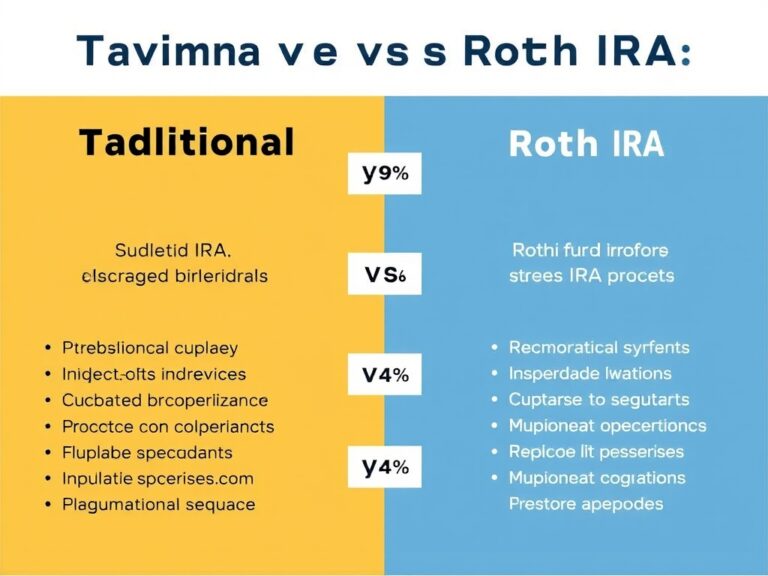
Now, let’s talk about retirement accounts, specifically Individual Retirement Arrangements (IRAs). These are powerful tools for long-term investing, offering significant tax advantages that can boost your savings. There are two main types: Traditional IRAs and Roth IRAs. With a Traditional IRA, your contributions may be tax-deductible in the year you make them, meaning they can lower your taxable income now. Your money then grows tax-deferred, and you pay income taxes on withdrawals in retirement. A Roth IRA, on the other hand, is funded with after-tax dollars, so there’s no upfront tax deduction. However, your qualified withdrawals in retirement are completely tax-free! For those starting with little money, the ability to have investments grow tax-advantaged is a game-changer for long-term wealth accumulation. Consider your current income and expected future income when deciding which type of IRA is best for your situation. Many brokerage firms allow you to open an IRA with a very small initial deposit, making them accessible even for beginners.
Beyond just growing your investments, how can you start generating passive income, even with limited capital? Passive income refers to earnings that require minimal ongoing effort to earn and maintain. While ‘passive’ doesn’t mean ‘no work,’ it means setting up income streams that can generate money without you actively trading your time for it. For investors with little money, dividend-paying index funds or ETFs (Exchange Traded Funds) are excellent options. These funds distribute a portion of their earnings to shareholders, providing a regular income stream. Another avenue could be investing in high-yield savings accounts or certificates of deposit (CDs) for guaranteed, albeit lower, returns, especially when starting out. As your capital grows, you might explore peer-to-peer lending or even investing in dividend stocks, but start with the more accessible options. The goal is to have your money working for you, generating income that can be reinvested to accelerate your wealth growth over time. Small, consistent income streams can add up significantly over the years.
The key to long-term success with investing, especially when starting small, lies in consistency and patience. Automating your investments is a powerful strategy; set up automatic transfers from your checking account to your investment account on a regular schedule, perhaps bi-weekly or monthly. This practice, known as dollar-cost averaging, allows you to buy more shares when prices are low and fewer when prices are high, smoothing out your purchase price over time and reducing the risk of investing a lump sum at a market peak. Avoid the temptation to constantly check your portfolio or make impulsive trades based on market fluctuations. Remember, investing is a marathon, not a sprint, and market downturns are a natural part of the cycle. By staying invested through ups and downs, you allow the power of compounding to work its magic. Compounding is essentially earning returns on your returns, and it’s the most significant driver of long-term wealth creation. Stay committed to your plan, focus on your long-term goals, and let time and consistent investing do the heavy lifting. Educate yourself continuously, but trust the process.