
How to Start Investing with Little Money: Best Index Funds, IRA Comparison, and Passive Income Strategies for Beginners
Hey there, future investor! Ever thought about diving into the world of investing but felt like you needed a bulging bank account to even get started? Well, I’ve got some fantastic news for you: you absolutely don’t! Starting your investment journey with little money is not only possible, but it’s also one of the smartest financial moves you can make. Think of it like planting a tiny seed; with consistent care and a little time, it can grow into a mighty tree. We’re going to explore how you can begin building wealth, even on a tight budget, focusing on smart strategies like index funds, understanding IRAs, and leveraging passive income. It’s all about making your money work for you, no matter how small the initial amount. So, buckle up, because we’re about to demystify investing and make it accessible for everyone. Let’s turn those financial dreams into a reality, one small step at a time. Remember, the best time to start investing was yesterday, but the second-best time is right now! This guide is your first step to financial empowerment.
So, where do you begin when you have just a little cash to spare? The answer often lies in the magical world of index funds. Imagine an index fund as a basket holding tiny pieces of many different companies, like the S&P 500. When you invest in an S&P 500 index fund, you’re essentially buying a small stake in the 500 largest U.S. companies. Why is this brilliant for beginners with little money? Diversification! Instead of risking all your capital on one or two stocks, you’re spread across hundreds, significantly reducing risk. Plus, index funds typically have very low fees compared to actively managed funds, meaning more of your money stays invested and grows. You can start with apps and brokerage accounts that allow you to invest with as little as $1, making it incredibly beginner-friendly. Look for low-cost index funds from reputable providers. These funds aim to *track* the performance of a specific market index, offering a simple yet powerful way to participate in the market’s growth. It’s a set-it-and-forget-it approach that truly benefits from long-term compounding.
- What are Index Funds? They are mutual funds or ETFs that aim to mirror the performance of a specific market index.
- Why are they good for beginners? Diversification and low costs are key advantages.
- How to start? Open an account with a low-fee brokerage and choose a broad market index fund.

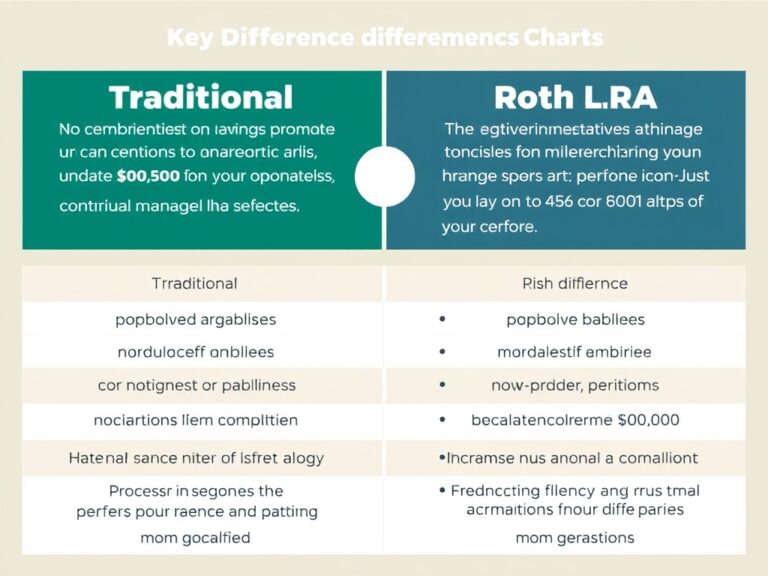
Now, let’s talk about retirement accounts, specifically the Individual Retirement Arrangement (IRA). For beginners, understanding IRAs is crucial because they offer significant tax advantages that can supercharge your long-term returns. There are two main types: the Traditional IRA and the Roth IRA. With a Traditional IRA, your contributions may be tax-deductible in the year you make them, lowering your current taxable income. Your money then grows tax-deferred until retirement, when withdrawals are taxed. On the other hand, a Roth IRA is funded with after-tax dollars, meaning no upfront tax deduction. However, qualified withdrawals in retirement are completely tax-free! For many beginners, especially those in lower tax brackets now, a Roth IRA is often the more attractive option because you pay taxes now when your rate is lower, and enjoy tax-free income later. You can open an IRA with many brokerage firms, often with no minimum deposit, allowing you to start investing small amounts regularly. Think of it as a special savings account designed specifically for your golden years, with built-in government incentives.
- Traditional IRA: Tax-deductible contributions, tax-deferred growth, taxed withdrawals in retirement.
- Roth IRA: After-tax contributions, tax-free growth, and tax-free qualified withdrawals in retirement.
- Which is best? Often, Roth IRAs are preferred by beginners due to tax-free withdrawals in retirement.
Beyond just investing in funds or retirement accounts, how can you actively generate more income to fuel your investments or supplement your savings? This is where passive income strategies come into play, and they are more accessible than you might think, even with little money to start. Passive income is earnings derived from an enterprise in which a person is not actively involved on a day-to-day basis. While no income is truly ‘passive’ initially (it often requires upfront work or investment), the goal is to create streams that generate money with minimal ongoing effort. Think about leveraging skills you already have: could you create and sell digital products like e-books or printables online? Or perhaps you have a hobby you could monetize through a blog or a small online store? For those with a bit more capital, dividend-paying stocks or REITs (Real Estate Investment Trusts) can provide regular income. Even a high-yield savings account, while not glamorous, offers a small passive return on your cash. The key is to find something that aligns with your interests and available resources, and to start small. Consistency is vital; regularly reinvesting small amounts of passive income back into your investments will significantly accelerate your wealth-building.
- What is Passive Income? Income earned with minimal active effort after an initial investment or setup.
- Beginner-friendly ideas: Digital products, affiliate marketing, dividend stocks, REITs.
- The Goal: Create income streams that can be reinvested to grow your wealth faster.
Let’s tie it all together and talk about building a sustainable investment habit, even with limited funds. The most powerful tool you have is consistency. It’s far more effective to invest a small amount regularly – say, $50 or $100 every month – than to try and save up a huge lump sum. This strategy, known as dollar-cost averaging, helps smooth out market volatility because you’re buying more shares when prices are low and fewer when they’re high. Many brokerage apps now offer automatic investment plans, making this incredibly easy to implement. Combine this with a clear understanding of your goals: are you saving for a down payment, retirement, or just general wealth building? Having a target makes it easier to stay motivated. Don’t get discouraged by the small numbers initially; compound interest is a magical force that amplifies your returns over time. Even a few dollars saved and invested consistently can grow substantially over decades. Educate yourself continuously, stay patient, and celebrate your progress along the way. Remember, building wealth is a marathon, not a sprint, and starting small is a perfectly valid and often very successful way to begin.
- Embrace Consistency: Invest small amounts regularly (dollar-cost averaging).
- Set Clear Goals: Know *why* you are investing.
- Harness Compound Interest: Time and consistency are your greatest allies.
- Stay Patient: Wealth building takes time.