
How to Start Investing with Little Money: Index Funds, Roth vs Traditional IRA, and Passive Income Strategies for Long-Term Success
Start Your Wealth-Building Journey Today
Many people believe you need thousands of dollars to start investing, but the truth is you can begin with as little as $5 or $10. Investing is not just for the wealthy; it is a foundational habit for anyone looking to build long-term success. By starting small, you harness the power of compound interest, which works best when you give it time to grow. Think of your early investments as seeds that will eventually grow into a financial forest if nurtured consistently. You don’t need a Wall Street background to navigate the markets; you just need patience and a plan.
- Start small with micro-investing apps.
- Focus on consistency over large lump sums.
- Prioritize your financial education early on.
This approach demystifies the market and removes the intimidation factor that keeps many beginners on the sidelines. Remember, the best time to plant a tree was twenty years ago, but the second best time is today. Let’s explore how to make your money work harder for you regardless of your starting balance.

The Magic of Index Funds: Simplified Investing
If you want a low-maintenance way to grow your wealth, index funds are your best friend. Instead of trying to pick individual winning stocks—which is notoriously difficult—you buy a slice of the entire market. This strategy provides instant diversification, significantly lowering your risk profile compared to betting on one company. Index funds track specific market segments, like the S&P 500, ensuring your performance mirrors the overall growth of the economy. Because they are passively managed, they typically come with much lower fees than actively managed mutual funds. Over time, those saved fees add up to thousands of dollars in your pocket.
- Enjoy automated diversification.
- Benefit from lower management expense ratios.
- Spend less time analyzing charts and more time living your life.
By keeping your costs low and your portfolio diversified, you position yourself to capture the market’s long-term upward trajectory. It is the ultimate ‘set it and forget it’ strategy for the long-term investor.
Roth vs. Traditional IRA: Tax Efficiency Matters
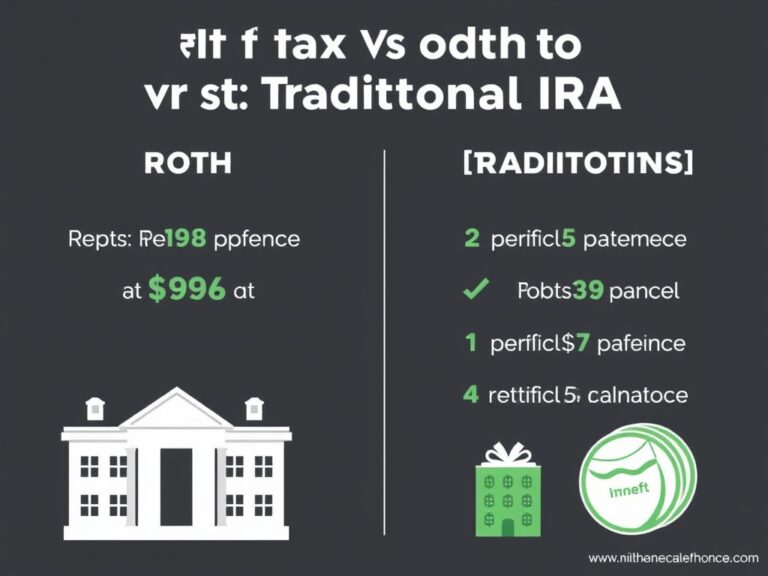
When you start investing, you need to decide where to stash your funds for retirement, and Roth and Traditional IRAs are the gold standards. A Roth IRA allows you to invest money that has already been taxed, meaning your withdrawals in retirement are completely tax-free. This is a massive advantage if you believe your tax bracket will be higher in the future. On the flip side, a Traditional IRA may allow you to deduct your contributions from your current taxable income, providing an immediate tax break today. The choice depends largely on your current income level and your expectations for future tax rates.
- Roth IRA: Tax-free growth and tax-free retirement withdrawals.
- Traditional IRA: Potential tax deduction for contributions made today.
- Always consider your long-term income projections.
Balancing these accounts can be a strategic move, but the most important thing is simply starting the account and contributing consistently. Both options offer powerful tax-advantaged environments that protect your gains from the yearly bite of the tax man.
Building Passive Income Strategies for the Long Run
While long-term investing is the goal, building passive income streams can accelerate your journey toward financial freedom. Think of passive income as the engine that runs while you sleep, creating money that doesn’t rely solely on your active 9-to-5 labor. Dividends from your index funds are a classic form of passive income, as companies pay you just for being a shareholder. Furthermore, you can explore automated investment platforms that reinvest those dividends for you, supercharging the compound interest effect. Financial success is about layering income streams, starting with your index funds and potentially branching out into other low-effort ventures.
- Reinvest dividends to compound your holdings.
- Look for assets that provide steady cash flow.
- Keep your overhead low to maximize your investable capital.
By staying disciplined and avoiding the temptation to spend your returns prematurely, you turn small contributions into a life-changing nest egg. Stay focused on your goals, keep your costs low, and watch your net worth climb steadily over the coming years.