
How to Start Investing with Little Money: Best Index Funds, Roth vs Traditional IRAs, and Passive Income Strategies for Long-Term Success
Hey there, future investor! 👋 Ever felt like investing is only for the ‘rich and famous’? Think again! Starting your investment journey with little money is not only possible, but it’s also one of the smartest financial moves you can make. The power of compounding, even with small amounts, can lead to significant wealth over time. We’re going to break down how you can get started, focusing on accessible options like index funds and understanding retirement accounts. It’s all about making your money work for you, even if you’re just starting with a few dollars. Let’s demystify investing and make it your ally in building long-term financial success. Get ready to transform your financial future, one small step at a time. The key is consistency and smart choices, not a massive initial capital. So, buckle up, because we’re about to unlock the secrets to growing your wealth from humble beginnings. You’ve got this, and I’m here to guide you every step of the way.

When you’re starting with a small amount, index funds are your best friend. Think of them as a basket holding tiny pieces of many different companies, automatically diversified for you. This means you’re not putting all your eggs in one basket, reducing risk significantly compared to picking individual stocks. For beginners, low-cost index funds, especially those tracking broad market indexes like the S&P 500, offer excellent potential for growth and are incredibly easy to manage. Popular options include ETFs (Exchange Traded Funds) and mutual funds. ETFs trade like stocks, offering flexibility, while mutual funds are priced once a day. The goal here is to capture the overall market’s performance without the headache of researching countless companies. Many brokerage accounts now offer commission-free trading for ETFs, making them even more accessible for small investments. Researching funds like VOO (Vanguard S&P 500 ETF) or SPY can be a great starting point. Remember, the ‘little money’ you invest today can grow exponentially over decades thanks to the magic of compound returns. This diversification is crucial for long-term stability and growth.

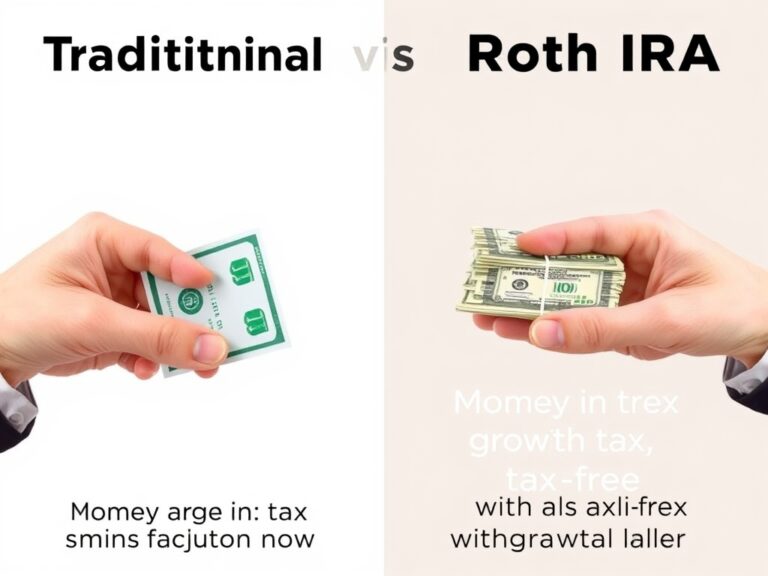
Now, let’s talk about retirement accounts – specifically, Roth vs. Traditional IRAs. An IRA (Individual Retirement Account) is a tax-advantaged way to save for retirement. The big difference lies in when you get the tax break. With a Traditional IRA, your contributions might be tax-deductible now, lowering your current taxable income, but you’ll pay taxes on withdrawals in retirement. On the other hand, a Roth IRA uses after-tax dollars, meaning you don’t get a tax deduction now, but your qualified withdrawals in retirement are completely tax-free! 💰 For those starting with little money and expecting their income to rise in the future, a Roth IRA is often the more attractive option. You pay taxes on your contributions now when your tax bracket is likely lower, and enjoy tax-free growth and withdrawals later. It’s a fantastic way to lock in tax-free income for your golden years. Both have contribution limits, so it’s wise to check the current year’s maximums. Starting early with either is key to maximizing your retirement savings.
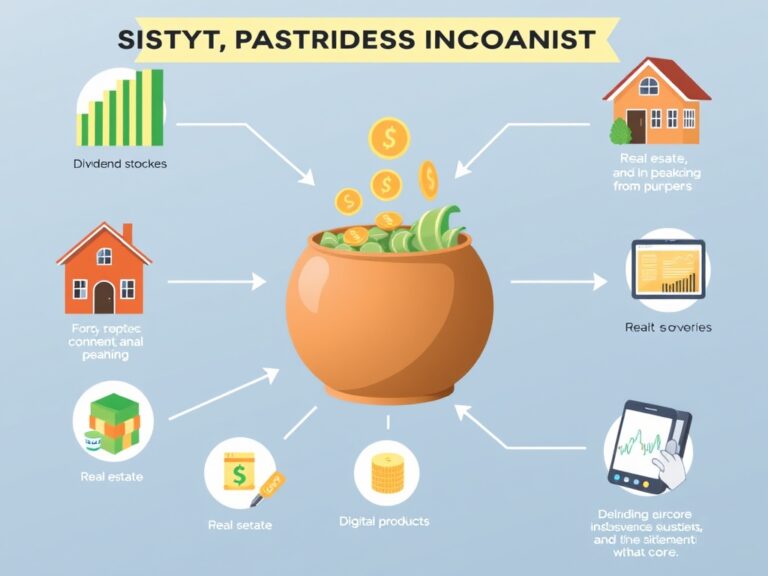
Beyond traditional investments, consider passive income strategies to supplement your growth. Passive income is money earned with minimal ongoing effort. While it often requires an upfront investment of time or money, it can create a steady stream of income that compounds your investment returns. Examples include dividend stocks (companies that pay you a portion of their profits), real estate crowdfunding (investing small amounts in larger real estate projects), or even creating digital products like e-books or online courses. 💡 Even with little money, you can start by investing in dividend-paying index funds or ETFs. These funds offer both potential capital appreciation and regular income distributions. The income generated can be reinvested to buy more shares, accelerating your compounding growth. Focus on strategies that align with your budget and risk tolerance. The beauty of passive income is its potential to generate earnings 24/7, enhancing your overall financial security and accelerating your journey to financial independence. It’s about building multiple income streams that work for you.
Consistency is paramount when investing with little money. Set up automatic transfers from your checking account to your investment account on a regular basis, even if it’s just $25 or $50 a week. This ‘dollar-cost averaging’ strategy helps smooth out the market’s ups and downs. You buy more shares when prices are low and fewer when prices are high, averaging your purchase cost over time. 📈 It removes the emotional aspect of trying to ‘time the market,’ which is notoriously difficult even for professionals. Automating your investments means you’re less likely to forget or skip a contribution, ensuring steady progress towards your financial goals. Think of it as paying yourself first, on autopilot. This disciplined approach is the secret sauce to long-term success, transforming small, consistent contributions into a substantial nest egg. Make it a non-negotiable part of your budget, just like rent or utilities. This habit-forming behavior is key to building wealth over time.