
Beginner’s Guide to Investing Small: Index Funds, IRAs, Passive Income & Long-Term Growth
Start Your Wealth-Building Journey Today
Have you ever felt like investing was a secret club reserved only for the wealthy elite? Well, let me let you in on a secret: that couldn’t be further from the truth! You don’t need thousands of dollars to start; in fact, you can begin your journey toward long-term growth with as little as $50 or $100. The key isn’t how much you start with, but consistency and time. By leveraging the power of compound interest, even small, regular contributions can snowball into significant wealth over a few decades. Think of your money as a seed; if you plant it in the right soil—like a diversified investment account—it will eventually grow into a tree that provides shade and fruit for years to come. In this guide, we will break down the barriers to entry and show you exactly how to make your money work for you, starting right now. Whether you are aiming for early retirement or simply want a financial safety net, the strategies we discuss are designed for every beginner. It is time to stop waiting for the ‘perfect’ moment and start building your financial future today. Remember, the best time to invest was yesterday, but the second-best time is right this minute.

The Magic of Index Funds and ETFs
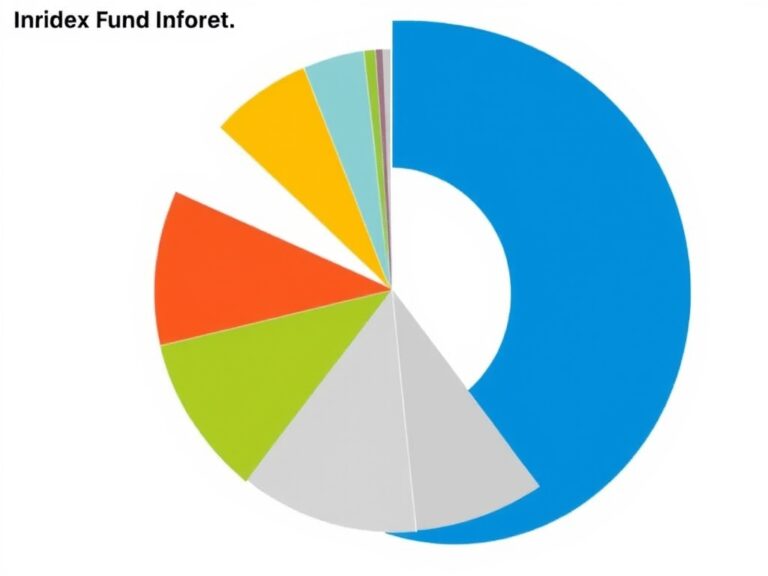
When you are just starting out, picking individual stocks can feel like trying to find a needle in a haystack—and frankly, it is incredibly risky for a beginner. This is where index funds come in. An index fund is a type of mutual fund or exchange-traded fund (ETF) designed to track the components of a financial market index, such as the S&P 500. By investing in one, you are essentially buying a tiny piece of hundreds or even thousands of companies all at once. This diversification is your best friend because if one company underperforms, the others keep your portfolio steady.
- Low Fees: Index funds usually have very low expense ratios.
- Instant Diversification: You own a slice of the entire market.
- Passive Management: No need to study stock charts daily.
This ‘set it and forget it’ approach is perfect for building passive income without the headache of active trading. It removes the emotional roller coaster of trying to time the market, which is a trap even professionals struggle to avoid. By sticking to low-cost broad-market index funds, you are setting yourself up for historical market-average returns, which is often enough to outperform most active investors over a 20-year horizon.
Mastering IRAs for Tax-Advantaged Growth
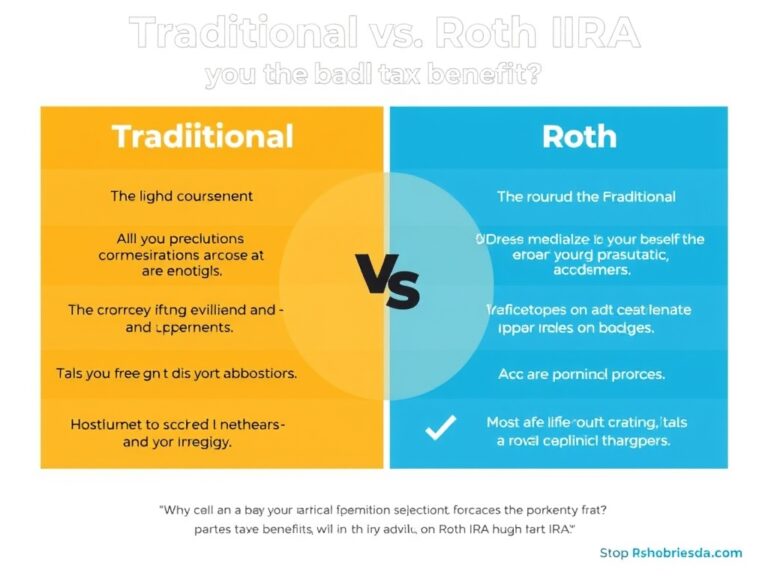
If you are serious about long-term growth, you absolutely must utilize tax-advantaged accounts, specifically Individual Retirement Accounts (IRAs). The government actually wants you to save for your future, so they provide these accounts to help your money grow without the drag of heavy annual taxes. There are two primary types you should know: Traditional IRAs and Roth IRAs.
- Traditional IRA: Offers a tax deduction today, but you pay taxes when you withdraw in retirement.
- Roth IRA: You pay taxes now on your contributions, but your investments grow tax-free, and withdrawals in retirement are completely tax-free!
For most beginners, a Roth IRA is often the preferred choice because it allows your capital gains to accumulate for decades without ever owing the IRS a cent on that profit. Imagine retiring with a massive nest egg and knowing that the entirety of it belongs to you—not the government! Making regular contributions to an IRA, even if it is just a small percentage of your paycheck, builds a powerful foundation for your financial independence. Once the money is inside the account, ensure you don’t just leave it as cash; make sure it is invested in those index funds we mentioned earlier. This combination of tax savings and market growth is the ultimate engine for personal wealth.
Consistency and the Long-Term Mindset
The final piece of the puzzle is your mindset, which is arguably more important than the actual math. Investing for long-term growth requires patience, discipline, and the ability to ignore the daily noise of market crashes or hype-fueled rallies. We recommend a strategy called Dollar-Cost Averaging, where you invest a fixed dollar amount at regular intervals, regardless of the share price. This strategy automatically buys more shares when the market is down and fewer when it is up, effectively lowering your average cost over time. The biggest mistake beginners make is panicking and selling during a dip. If you zoom out, the market has historically trended upward over any 15 to 20-year period. By staying the course, you allow your passive income stream to build momentum. Set up an automatic transfer from your bank to your brokerage account so that investing becomes a ‘set and forget’ habit. Treat your investment contributions like a non-negotiable bill that you pay to your future self. Keep learning, stay curious, and remember that financial freedom is a marathon, not a sprint. You are now equipped with the tools to take control of your financial destiny, so take that first step today!