
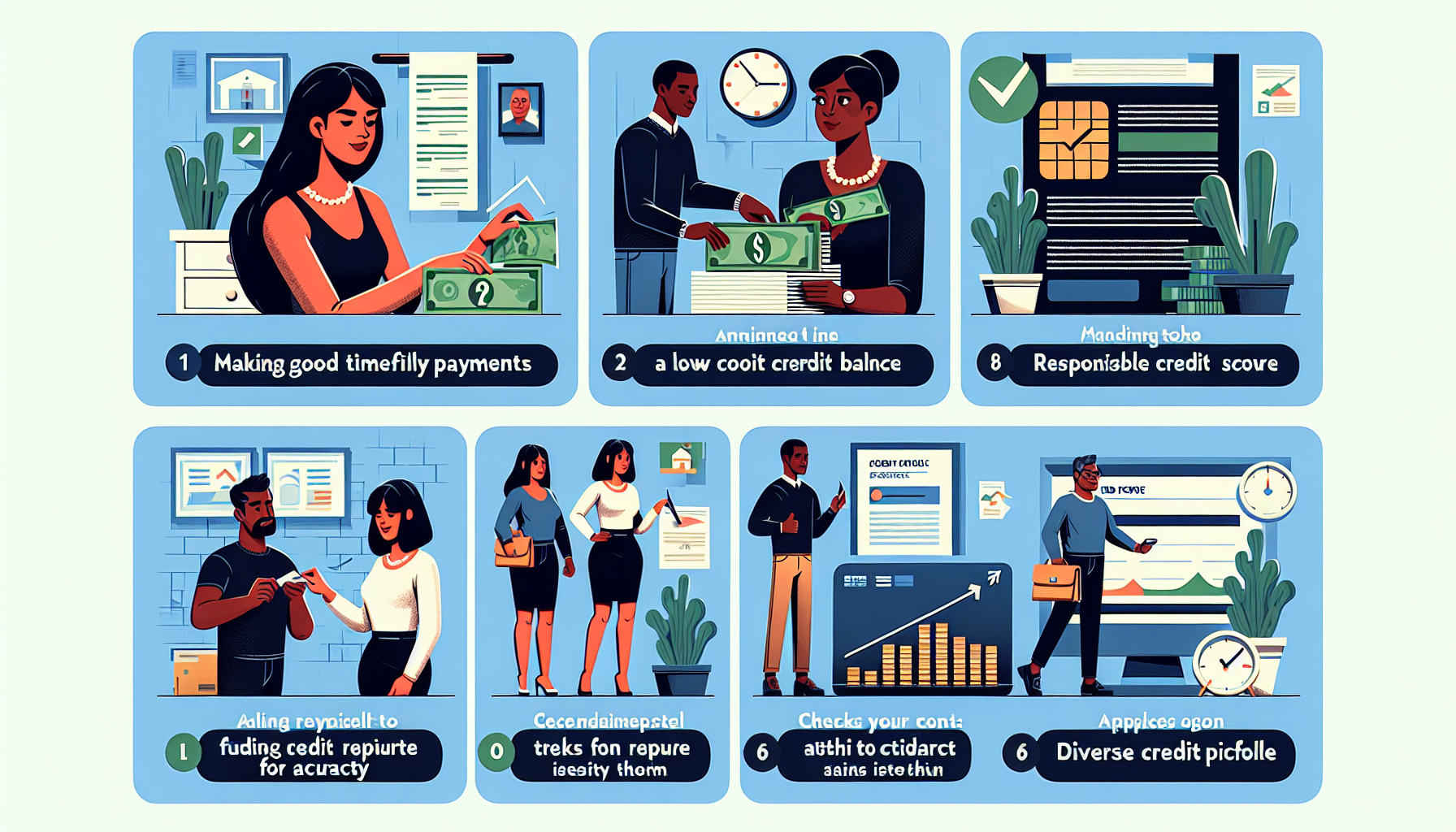
A Step-by-Step Guide to Building a Good Credit Score
Building a good credit score is essential for financial health, as it influences your ability to secure loans, obtain favorable interest rates, and even impacts employment opportunities. Here’s a step-by-step guide to help you establish and maintain a strong credit profile:
1. Understand the Components of Your Credit Score
Credit scores typically range from 300 to 850 and are calculated based on several factors:
- Payment History (35%): Timely payments on credit cards, loans, and other debts.
- Credit Utilization (30%): The ratio of your current credit card balances to credit limits.
- Length of Credit History (15%): The duration of your credit accounts.
- Credit Mix (10%): Variety of credit accounts, such as credit cards, mortgages, and auto loans.
- New Credit (10%): Recent credit inquiries and newly opened accounts.
2. Pay Your Bills on Time
Consistently making on-time payments is crucial, as payment history is the most significant factor in your credit score. Set up automatic payments or electronic reminders to ensure you never miss a due date. (consumerfinance.gov)
3. Keep Credit Utilization Low
Aim to use no more than 30% of your available credit limit. For example, if your credit limit is $1,000, try to keep your balance below $300. Lower utilization rates are even more beneficial. (consumerfinance.gov)
4. Establish a Credit History
If you’re new to credit, consider starting with a secured credit card or becoming an authorized user on a family member’s account. These steps can help you build a credit history, which is essential for a good credit score. (consumerfinance.gov)
5. Avoid Opening Too Many New Accounts
Each credit application can result in a hard inquiry on your credit report, which may temporarily lower your score. Limit new credit applications to those you genuinely need. (consumerfinance.gov)
6. Regularly Review Your Credit Reports
Obtain free copies of your credit reports from the three major bureaus—Equifax, Experian, and TransUnion—at least once a year. Review them for accuracy and dispute any errors you find. (consumerfinance.gov)
7. Practice Responsible Credit Management
Create a budget to manage your spending and ensure you can pay off your credit card balances in full each month. Responsible credit use over time will positively impact your credit score. (citi.com)
By following these steps, you can build and maintain a good credit score, leading to better financial opportunities and stability.