
Unlock Wealth: Your Beginner’s Guide to Investing Small, Growing Big with Index Funds and Smart Retirement Choices
Have you ever felt like the stock market is a private club reserved only for the ultra-wealthy? It’s a common myth that keeps millions of people from taking control of their financial destiny. The truth is, you can start building significant wealth today with just the spare change in your pocket. By embracing the strategy of investing small and growing big, you leverage the most powerful force in finance: compounding interest. Compounding is essentially the process where your earnings earn earnings, creating a snowball effect over time. Imagine planting a tiny seed that eventually grows into a massive, fruit-bearing tree—that is exactly how micro-investing works. 💡 “The best time to plant a tree was 20 years ago; the second best time is now.” Even starting with as little as $5 a week can dramatically alter your long-term financial trajectory if you are consistent. This beginner’s guide is designed to demystify the process and show you how easy it is to start. We will explore how simple shifts in your daily habits can unlock massive wealth. So, let’s shed the fear of the unknown and take that first, crucial step toward financial freedom together. Your future self will thank you for making the decision to start today rather than tomorrow.

What Exactly is an Index Fund?
Now that you’re ready to start, let’s talk about the ultimate tool for beginner investors: index funds. Instead of trying to guess which individual stock will be the next big winner, an index fund allows you to buy a tiny piece of hundreds of companies all at once. This means you are instantly diversified, which drastically lowers your overall investment risk. For example, when you invest in an S&P 500 index fund, you are buying a stake in the 500 largest publicly traded companies in America. If one company struggles, others will rise to balance it out, keeping your portfolio stable. 📊 There are three main reasons why index funds are highly recommended by financial experts.
- Low Fees: First, they feature extremely low fees because they are passively managed.
- Consistent Returns: Second, they offer historically consistent returns of around ten percent annually over the long term.
- Set-and-Forget: Third, they provide a set-and-forget simplicity that requires zero stock-picking knowledge.
This low-cost, hands-off approach is perfect for anyone wanting to grow their money without stress. It turns investing from an intimidating chore into a seamless, automated habit. Investing in index funds is truly the closest thing to a “cheat code” for long-term wealth building.
Securing Your Future: Smart Retirement Choices
Building wealth isn’t just about watching your brokerage account balance grow; it’s about making smart retirement choices that protect your money from taxes. Understanding the difference between various retirement accounts can save you thousands of dollars down the road. First, if your employer offers a 401(k) match, you must take advantage of it immediately. 🚀 An employer match is literally free money—failing to contribute up to the match is like leaving cash on the table. Beyond the 401(k), you should look into Individual Retirement Accounts, commonly known as IRAs. There are two primary types of IRAs to choose from, each offering unique tax advantages.
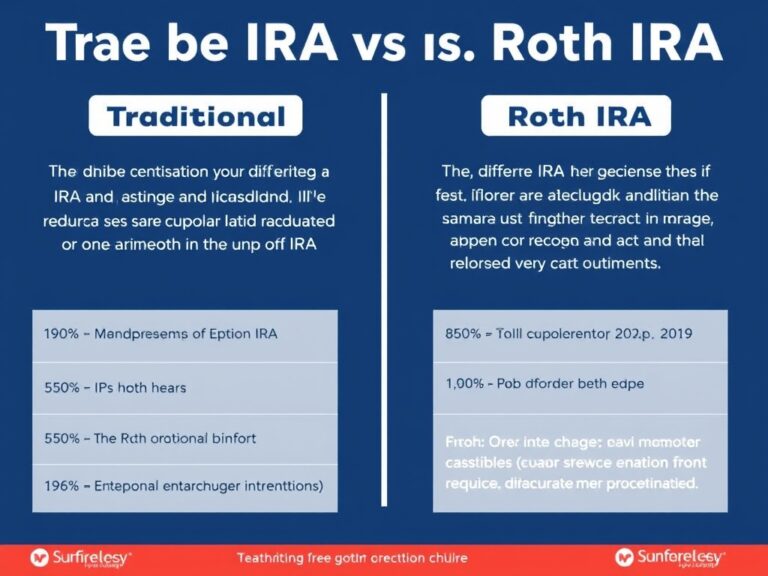
- Traditional IRA: With a Traditional IRA, your contributions are tax-deductible now, but you pay taxes when you withdraw the money.
- Roth IRA: With a Roth IRA, you invest after-tax money, but your withdrawals during retirement are 100% tax-free.
For young beginners, a Roth IRA is often the holy grail of retirement accounts because of tax-free growth. By setting up automatic monthly contributions to these accounts, you ensure your future is funded first. Even modest, consistent contributions to a retirement account in your 20s or 30s can result in a massive nest egg by age 65. Taking these steps today ensures you won’t have to work forever to maintain your desired lifestyle.
The Power of Consistency: Dollar-Cost Averaging
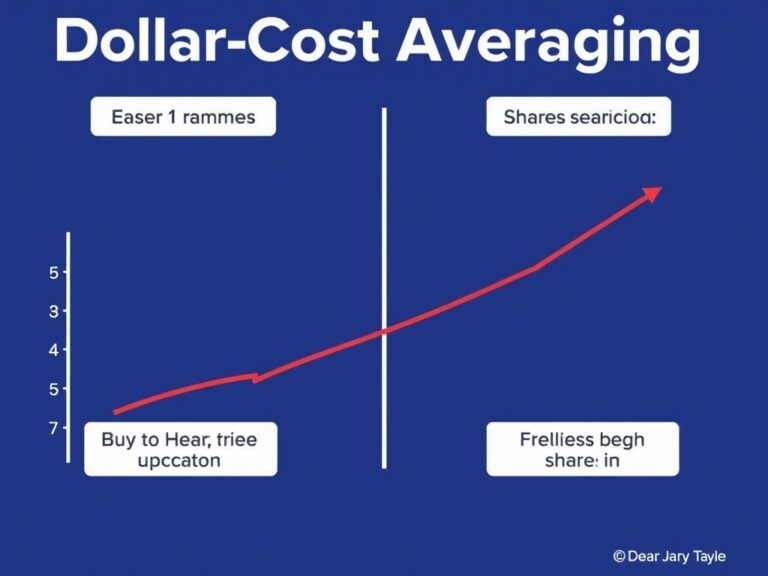
Many beginners hesitate to invest because they fear the market will crash the day after they put their money in. This fear is completely natural, but there is a brilliant strategy designed to eliminate this anxiety: Dollar-Cost Averaging (DCA). DCA involves investing a fixed amount of money at regular intervals, regardless of whether the market is up or down. When prices are high, your fixed amount buys fewer shares; when prices are low, your money automatically buys more shares on sale. This simple tactic takes the emotion out of investing and prevents you from trying to time the market. ⏱️ Attempting to time the market is a proven loser’s game, even for Wall Street professionals. By automating your investments, you transform market volatility from a source of fear into an opportunity. The classic rule of buying low and selling high happens automatically without you having to constantly watch the financial news. Over years, this disciplined approach lowers your average cost per share and builds a robust financial foundation. All you need to do is set up an automatic transfer from your checking account to your investment account every payday. Consistency, not luck or timing, is the ultimate key to unlocking long-term wealth.
Your Action Plan: How to Start Today
Now that you possess the knowledge, it is time to turn these insights into concrete action. Setting up your investment journey is easier than ever before, thanks to modern, user-friendly financial technology. First, choose a reputable brokerage platform that offers commission-free trading and fractional shares. Fractional shares are fantastic because they allow you to buy a portion of an expensive index fund with whatever budget you have. Second, review your monthly budget and identify a small amount you can comfortably automate toward your investments. 📋 There are three simple steps you can take today to kickstart your portfolio.
- Step One: Step one is to open an account with a low-cost brokerage like Vanguard, Fidelity, or Charles Schwab.
- Step Two: Step two is to set up a recurring transfer of $10, $50, or $100 every month.
- Step Three: Step three is to invest that money into a broad-market index fund, such as one tracking the S&P 500 or the total stock market.
Do not let perfectionism paralyze you; starting small with $10 is infinitely better than waiting until you have $10,000. Once you see your portfolio begin to grow, you will feel a sense of empowerment that carries over into all areas of your life. Invest in your future today, stay disciplined, and watch your small beginnings turn into a massive financial harvest.