
How to Start Investing with Little Money: Best Index Funds, IRA Comparison, and Passive Income Strategies for Long-Term Growth
Start Small, Think Big: Your Journey to Financial Freedom
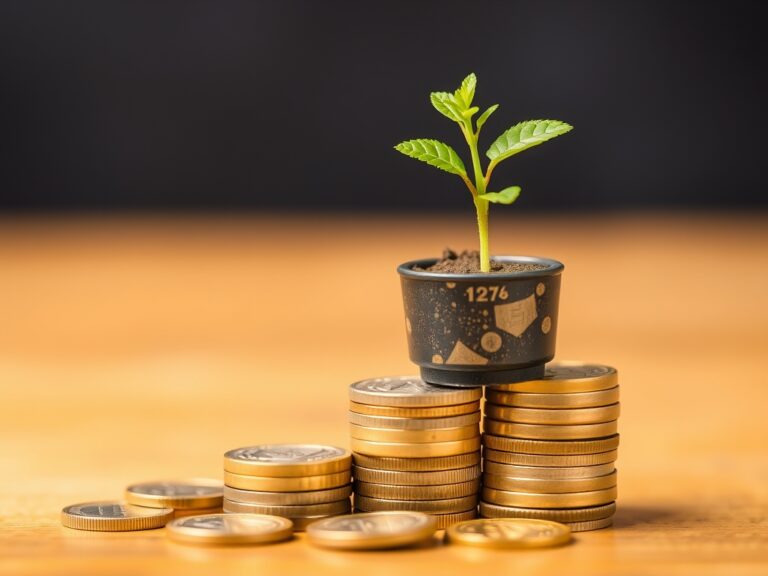
Many people mistakenly believe you need thousands of dollars to start investing, but in reality, you can begin with as little as $10 or $50. The secret isn’t how much you start with, but consistency and the power of compound interest working in your favor over time. By prioritizing small, regular contributions, you develop a financial habit that transforms your future wealth-building potential. Imagine planting a seed today; even if it’s small, it grows into a mighty tree if you water it consistently. You don’t need to be a Wall Street expert to get started; you just need to understand the basics of low-cost index funds and market consistency. Many platforms now offer fractional shares, allowing you to own a piece of high-performing companies without the heavy price tag. This accessibility has democratized investing, making it possible for students, gig workers, and families to participate in the stock market. Take that first step today, even if it feels modest, because time is your greatest asset. Remember, even a small amount invested today is better than waiting until you ‘have enough.’ Start small, stay disciplined, and watch your portfolio bloom.
Mastering Index Funds: The Lazy Investor’s Best Friend
When you are ready to invest, index funds should be your primary focus because they provide instant diversification across hundreds or thousands of stocks. Instead of gambling on a single ‘hot’ stock, you are buying a slice of the entire market, which significantly lowers your risk.
- Broad Market Exposure: Capturing the performance of the S&P 500.
- Low Expense Ratios: Keeping more of your profit by minimizing management fees.
- Passive Growth: No need to study charts or news every single day.
By choosing low-cost index funds, you ensure that your money is working hard while you focus on your career or personal life. It is the ultimate strategy for long-term wealth accumulation because it avoids the pitfalls of emotional trading. Experts often suggest that most retail investors perform better with a ‘set-it-and-forget-it’ approach than trying to pick winning stocks. Always look for ETFs or Mutual Funds with an expense ratio below 0.10% to maximize your long-term returns. Diversification is your safety net, and index funds build that safety into your portfolio automatically. You are essentially betting on the growth of the global economy rather than a single firm’s luck. This is the bedrock of smart, sustainable investing for the average person.
IRA vs. 401(k): Choosing Your Tax-Advantaged Haven
To really boost your investments, you must use tax-advantaged accounts like an IRA (Individual Retirement Account) or a Roth IRA. These accounts are government-sanctioned vehicles that help you shield your gains from the tax man, either now or in the future. Roth IRAs are particularly powerful for young investors because your money grows tax-free, and you won’t pay taxes when you withdraw it in retirement. Meanwhile, a Traditional IRA might offer an immediate tax deduction, which can free up more cash for you to invest today. Consider these main benefits: tax-free growth, potential tax deductions, and long-term discipline. If you have a 401(k) match at your job, prioritize that first because it is effectively a 100% immediate return on your investment. Once you max out your employer match, shift your focus to opening an IRA on a reputable brokerage platform. It is a simple process that takes about 15 minutes online but yields decades of financial benefits. Do not let the terminology scare you; think of these accounts as specialized ‘buckets’ for your money that keep the government from taking a cut of your growth. Make the decision today to structure your assets for maximum tax efficiency.
Passive Income and Future Growth: Staying the Course
Finally, understand that the true beauty of this strategy lies in passive income and reinvesting your dividends. When your stocks pay out dividends, you should automatically reinvest them to buy more shares, creating a snowball effect of wealth. This is the magic of compounding, where your interest earns its own interest, leading to exponential growth over time. Stay focused on your long-term goals rather than the daily noise of market fluctuations or headlines. Automation is key; set up a recurring monthly transfer from your bank account to your investment account to ensure you never skip a month. As your income grows, try to increase your contribution percentage to build wealth even faster. Remember that volatility is a normal part of the investment cycle, and market corrections are just sales on high-quality assets. By ignoring the urge to check your balance every hour, you save yourself unnecessary anxiety and prevent emotional selling. Stay committed, be patient, and trust the process of slow, steady accumulation. Your future self will thank you for the small sacrifices and disciplined habits you are building right now. You are not just saving money; you are buying your future freedom one index fund share at a time.