How to Start Investing: A Beginner’s Guide to Small Money, Index Funds, IRAs, Passive Income & Smart Strategies
Hey there, future investor! Feeling like your bank account is a bit too shy to even think about the stock market? We get it. The world of investing can seem daunting, especially when you hear about huge sums of money. But guess what? You don’t need a fortune to get started. In fact, starting with small money is often the smartest way to begin your investment journey. Think of it like learning to swim; you start in the shallow end, get comfortable, and then gradually venture deeper. This guide is designed to be your trusty companion, breaking down complex concepts like index funds, IRAs, and passive income into digestible pieces. We’ll show you how to turn those spare change dreams into a tangible financial future, focusing on smart strategies that work even with a modest starting capital. So, buckle up, and let’s make your money work for you, one smart step at a time. Remember, consistency beats the amount you start with every single time!
Now, let’s talk about the magic of index funds. Imagine you want to invest in the stock market, but picking individual stocks feels like playing the lottery. Index funds offer a brilliant alternative. They are essentially a basket of stocks or bonds that aim to mirror the performance of a specific market index, like the S&P 500. So, instead of buying one or two companies, you’re instantly diversified across hundreds, or even thousands, of them! This diversification is key because it significantly reduces risk. If one company tanks, the others can help offset the loss. For beginners, index funds are often recommended because they are low-cost and require minimal active management, making them a fantastic option for passive investing. You can easily invest in them through various brokerage accounts, making them accessible even with small amounts of money. Consider them your effortless entry into broad market exposure, a truly smart strategy for steady growth.

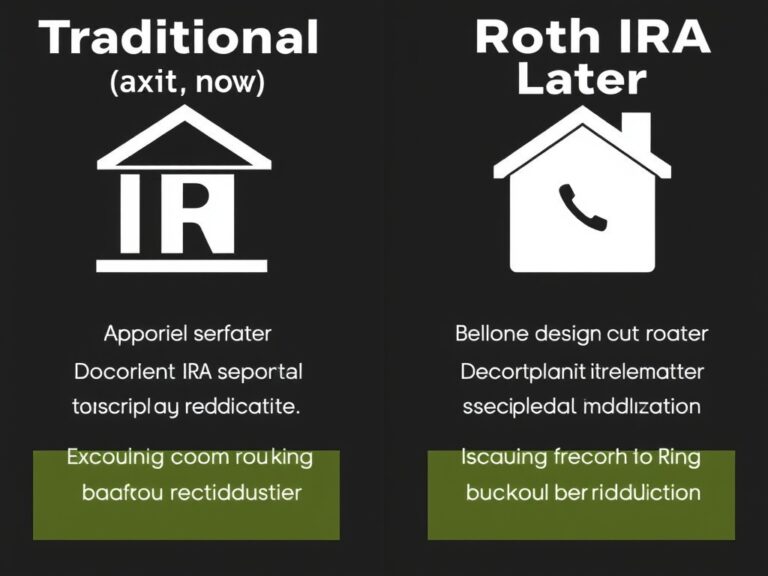
Let’s dive into the world of IRAs (Individual Retirement Arrangements). These are not just fancy acronyms; they are powerful tools designed to help you save for retirement with tax advantages. Think of an IRA as a special savings account that the government incentivizes you to use for your future. There are two main types: Traditional IRAs and Roth IRAs. With a Traditional IRA, your contributions may be tax-deductible now, meaning you pay taxes on the money when you withdraw it in retirement. A Roth IRA, on the other hand, is funded with after-tax dollars, but your qualified withdrawals in retirement are completely tax-free! For beginners, understanding which IRA best suits your financial situation is crucial. Both allow you to invest in a variety of assets, including those low-cost index funds we just discussed, making them perfect vehicles for building long-term wealth. Starting early with an IRA, even with small contributions, can make a monumental difference thanks to the power of compounding.
Now for the exciting part: passive income! This is income that you earn with minimal ongoing effort. While ‘get rich quick’ schemes are a myth, building passive income streams is a realistic and highly rewarding goal. Think of it as planting trees that bear fruit year after year without you having to constantly water them. Examples include dividend income from stocks or index funds, interest from bonds, rental income from properties (though this often requires more capital), or even royalties from creative work. For beginners with small money, focusing on dividend-paying index funds or ETFs (Exchange Traded Funds) is an excellent starting point. These can generate a steady stream of income that you can then reinvest to accelerate your portfolio’s growth. It’s about creating multiple avenues for your money to generate more money, slowly but surely building a financial cushion and potentially freedom.

Finally, let’s talk about smart strategies to keep your investment game strong, especially when you’re starting small. The golden rule? Consistency is key. Set up automatic transfers from your checking account to your investment account, even if it’s just $25 or $50 a week. This ‘set it and forget it’ approach helps you avoid emotional decisions and builds discipline. Another vital strategy is dollar-cost averaging. This means investing a fixed amount of money at regular intervals, regardless of market fluctuations. When prices are low, your fixed amount buys more shares; when prices are high, it buys fewer. Over time, this can lower your average cost per share and smooth out the impact of volatility. Always remember to diversify your investments across different asset classes to mitigate risk, and regularly rebalance your portfolio to maintain your desired asset allocation. Patience and a long-term perspective are your best friends in investing.