Your Guide to Investing: Start Small, Best Index Funds, Roth vs Traditional IRA, Passive Income & Smart Growth Strategies
Start Small: The Power of Micro-Investing
Many beginners feel they need thousands of dollars to start, but the truth is, you can begin with as little as $5 or $10. Investing is a journey, not a sprint, and the most important element is consistency. By starting small, you cultivate a healthy financial habit that compounds significantly over time thanks to the miracle of compound interest. Think of it like planting a tree; the best time to start was yesterday, but the second best time is today. You don’t need to be a Wall Street tycoon to build wealth; you just need to leverage apps that allow for fractional shares. This democratization of finance means that anyone with a smartphone can access the stock market. Small, recurring investments help mitigate the fear of ‘timing the market,’ which is a trap even professionals struggle to avoid. When you invest small amounts regularly, you practice dollar-cost averaging, which smooths out your purchase price. Remember, it is not about timing the market, but time in the market that truly counts. So, clear out those spare change apps, set up an automatic transfer, and watch your portfolio grow one dollar at a time!
Demystifying Best Index Funds for Beginners
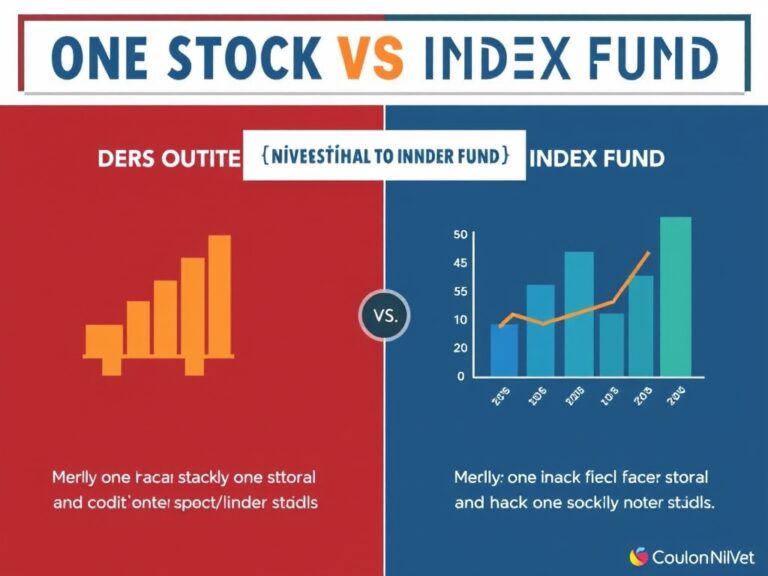
When you start your investment journey, picking individual stocks can feel like gambling, which is why index funds are the gold standard for long-term investors. An index fund is essentially a basket of stocks that mirrors a specific market index, like the S&P 500, offering instant diversification. Instead of betting on a single company to succeed, you are betting on the growth of the entire economy. This drastically reduces your risk and removes the stress of monitoring daily price swings.
- Low Fees: Index funds usually have lower expense ratios compared to actively managed mutual funds.
- Broad Exposure: You gain access to hundreds of top-tier companies in one click.
- Set and Forget: These funds are designed for long-term hold strategies.
By keeping your investment strategy simple, you avoid the emotional pitfalls of picking winners and losers. Many financial experts, including Warren Buffett, advocate for low-cost index funds as the most reliable way to build retirement wealth. You should look for funds with an expense ratio below 0.10% to ensure more of your money stays in your pocket. Diversification is your greatest defense against market volatility, and index funds make that incredibly easy to achieve. Stay focused on your goals and let the market do the heavy lifting for you.
Roth vs. Traditional IRA: Tax Efficiency 101
Understanding the difference between a Roth IRA and a Traditional IRA is crucial for tax-efficient growth. A Traditional IRA offers a tax break today because contributions are often tax-deductible, meaning you pay less income tax now. However, you will pay taxes on your withdrawals during retirement, making it a ‘tax-deferred’ account. In contrast, a Roth IRA requires you to pay taxes on your contributions upfront, but your withdrawals in retirement are completely tax-free. If you believe you will be in a higher tax bracket in the future, the Roth IRA is typically the superior choice.
- Traditional IRA: Best if you want immediate tax relief today.
- Roth IRA: Best if you want tax-free income when you retire.
Both accounts offer unique benefits, and the choice depends heavily on your current income and future expectations. It is often smart to consult with a tax professional to see which aligns with your long-term wealth strategy. Regardless of the type, opening an IRA is one of the smartest ways to shelter your growth from unnecessary taxes. Don’t let tax complexities paralyze your decision-making; choose one and start contributing consistently. Maximizing your annual contribution limits is a powerful step toward a secure financial future.
Passive Income & Smart Growth Strategies
Building passive income is the ultimate goal for many investors, as it provides financial independence and freedom from the 9-to-5 grind. Beyond dividend-paying index funds, you can generate passive income through real estate investment trusts (REITs) or high-yield savings accounts. The secret to smart growth is to reinvest your dividends or interest payments back into your portfolio. This creates a cycle where your money earns money, and that new money earns even more, exponentially accelerating your progress.
- Reinvest Dividends: Use the power of compound interest to buy more shares automatically.
- Automate Everything: Remove human error by setting up recurring deposits.
- Stay Educated: Follow reputable financial blogs and books to sharpen your strategies.
As your portfolio grows, you can eventually transition from growth-focused assets to income-generating ones. Do not be tempted by ‘get-rich-quick’ schemes or speculative assets that promise high returns for low effort. True wealth building is quiet, boring, and remarkably effective when done correctly. Be patient with your results, even during market corrections, because temporary dips are just buying opportunities for the long-term investor. Your commitment to these simple, proven strategies will pay dividends for decades to come.