
Start Investing with Little Money: Best Index Funds for Beginners, Roth vs Traditional IRA, Passive Income & Long vs Short Term Strategy
Start Your Journey: Investing With Little Money
You don’t need a massive windfall to start building wealth; in fact, the best time to start investing with little money is today. Many beginners feel intimidated by Wall Street jargon, but modern apps make it incredibly easy to buy fractional shares with as little as $5. 🚀 Think of your investment journey like planting a tree; the sooner you start, the more time compounding interest has to work its magic on your behalf. You should focus on consistent contributions rather than trying to time the market perfectly. By automating a small deposit every month, you remove the emotional stress of trading and build a sustainable habit. Remember, even a small amount grows significantly over decades due to the power of compound interest. Don’t worry about being perfect; just focus on being consistent. Once you automate your finances, you are already ahead of 90% of the population. This isn’t about getting rich overnight; it is about creating a secure financial future for yourself. Take that first step today, and watch your confidence grow along with your account balance.

Index Funds for Beginners: Your Building Blocks
If you are wondering where to put your first dollars, index funds are essentially the gold standard for long-term passive investors. An index fund is a type of mutual fund or ETF that aims to replicate the performance of a specific market index, like the S&P 500. By purchasing one fund, you effectively own a tiny piece of hundreds of companies, which provides instant diversification. 💡 Here is why they are perfect for newcomers:
- Low Fees: They typically have lower expense ratios than actively managed funds.
- Simplicity: You don’t have to research individual companies daily.
- Broad Exposure: You gain exposure to the entire economy rather than just one sector.
Some popular examples include total stock market funds or S&P 500 ETFs which provide excellent historical returns. When you buy these funds, you are betting on the long-term success of the economy as a whole. This is a much safer bet than picking individual stocks which can be highly volatile and unpredictable. Think of index funds as a way to ‘buy the haystack’ instead of searching for a single needle. Keep your portfolio simple and low-cost to maximize your net returns over time.
Roth vs Traditional IRA: Tax Efficiency Matters
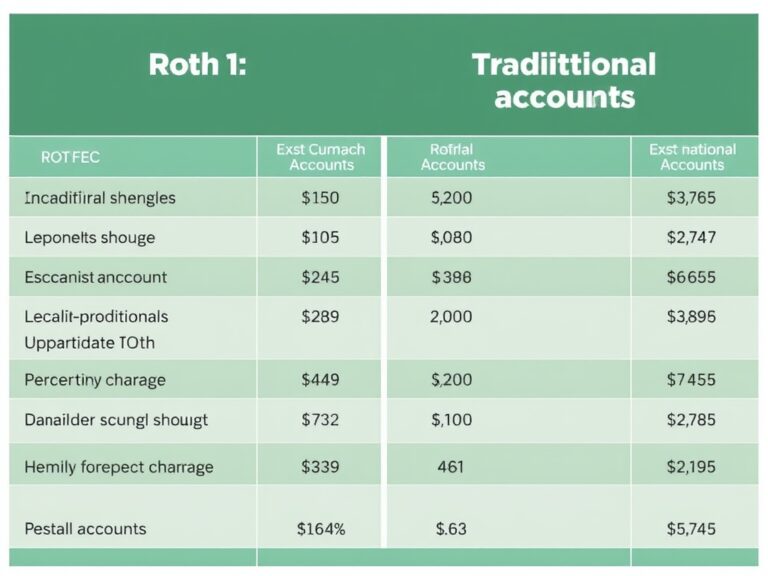
Understanding the difference between a Roth IRA and a Traditional IRA is crucial for your tax strategy. The main difference lies in when you get your tax break, which is a major factor in your overall retirement planning. With a Roth IRA, you contribute post-tax dollars, meaning you pay taxes now but enjoy tax-free withdrawals in retirement. 💰 This is often the superior choice for young investors who are in a lower tax bracket today than they expect to be in the future. Conversely, a Traditional IRA offers a tax deduction on your contributions today, but you will pay ordinary income taxes when you withdraw that money later. Consider these points when deciding:
- Current Income: Are you in a low or high tax bracket?
- Future Expectations: Do you expect your taxes to go up as you get older?
- Access: Both have rules regarding early withdrawals, so be careful.
Many experts suggest utilizing a Roth IRA to ensure that your future investment growth is completely shielded from the IRS. Always consult a tax professional if you have specific complex financial situations, but for most beginners, the Roth is a powerful engine for tax-free growth.
Long vs Short Term Strategy: Staying the Course
Finally, let’s talk about the difference between a long vs short term strategy in your investment approach. While short-term trading can be exciting, it often feels more like gambling, whereas a long-term mindset is the foundation of genuine wealth creation. 📈 A long-term strategy involves holding assets for years or even decades to ride out the inevitable ups and downs of the market. Short-term strategies, often involving day trading, require significant time, skill, and capital to succeed without succumbing to high fees and taxes. To build passive income, your goal should be to reinvest your dividends rather than spending them immediately.
- Stay Patient: Ignore the noise and daily headlines that incite panic.
- Diversify: Never put all your eggs in one basket.
- Stay Disciplined: Stick to your plan even when the market drops.
When you adopt a ‘buy and hold’ mentality, you reduce your stress levels significantly and allow the market to work for you. Always remember that the stock market is a device for transferring money from the impatient to the patient. By keeping your long-term goals in sight, you will stay motivated to keep contributing to your portfolio regardless of the daily market fluctuations. Your future self will thank you for the consistency you exhibit today.