
Unlock Your Financial Future: Investing with Little Money, Best Index Funds, Roth vs Traditional IRA, Passive Income & Long/Short Term Strategies
Have you ever felt like the world of finance is a members-only club where you need a mountain of cash just to get through the door? Well, I’m here to tell you that’s a total myth because unlocking your financial future actually starts with the small change in your pocket. Investing with little money is more accessible than ever before, thanks to fractional shares and zero-commission trading apps that let you buy into the biggest companies for the price of a latte. Micro-investing isn’t just a trend; it’s a powerful way to harness the magic of compound interest without feeling the pinch in your monthly budget. Imagine starting with just $5 or $10 a week; while it seems small now, those consistent contributions grow exponentially over time. The most important step isn’t how much you start with, but simply that you start today to give your money time to work for you. 🚀 To get started, you can look into platforms like Robinhood, Acorns, or Fidelity which allow for these bite-sized entries into the market. By automating your transfers, you remove the emotional hurdle of deciding when to invest, making the process seamless and stress-free. This strategy builds a foundation of financial discipline that serves as the bedrock for your future wealth-building journey. You don’t need to be a Wall Street tycoon to build a portfolio that reflects your dreams and aspirations. Remember, even the tallest oak tree started as a tiny acorn, and your bank account is no different. 💡 Focus on consistency over intensity, and you’ll be amazed at how quickly those small amounts add up.

Once you’ve committed to starting, the next big question is usually: “What on earth should I actually buy?” For most people, the best index funds represent the holy grail of investing because they offer instant diversification at an incredibly low cost. Instead of trying to find the next “unicorn” stock, an index fund allows you to own a tiny piece of hundreds of successful companies at once. 📉 For example, a standard S&P 500 index fund tracks the performance of the 500 largest publicly traded companies in the United States. This means if one company stumbles, your entire portfolio isn’t ruined because the other 499 are there to help carry the load. You should keep an eye on the “expense ratio,” which is the fee the fund charges; ideally, you want this to be as close to zero as possible.
- Vanguard 500 Index Fund (VOO): A classic choice for tracking the broad market with ultra-low fees.
- Fidelity ZERO Total Market Index Fund (FZROX): Great for those who want zero expense ratios.
- Schwab S&P 500 Index Fund (SWPPX): Another highly efficient and accessible option.
By choosing these funds, you aren’t just betting on one horse; you’re betting on the growth of the entire economy. Statistics show that over long periods, simple index funds often outperform actively managed funds run by professional stock pickers. 🏦 It’s a “set it and forget it” strategy that allows you to live your life while your wealth grows quietly in the background. This approach minimizes risk while maximizing your exposure to the general upward trend of the global markets. Whether you are a total beginner or a seasoned pro, these funds remain the backbone of a solid investment strategy.
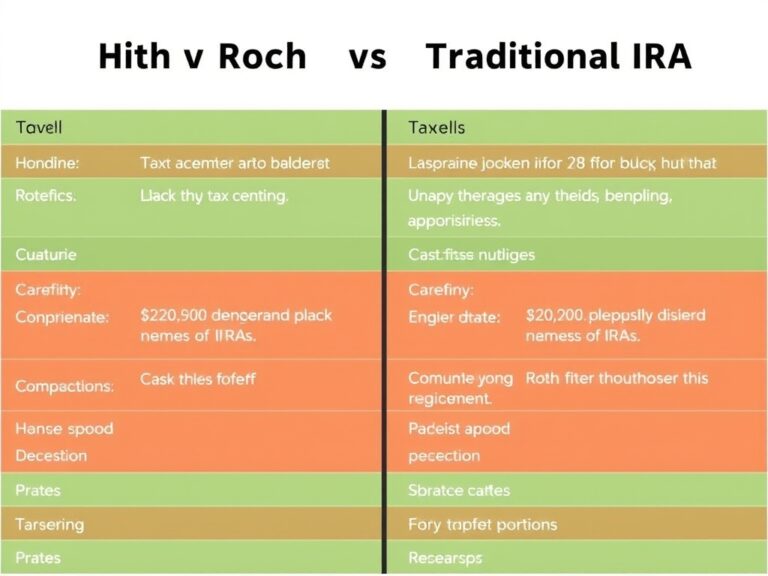
As your portfolio begins to take shape, you’ll need to decide which “bucket” or account type will hold your assets, specifically looking at Roth vs Traditional IRA options. Choosing between these two is essentially a game of “pay taxes now or pay taxes later,” and the choice can save you thousands of dollars over time. A Traditional IRA offers an immediate tax break because your contributions are often tax-deductible in the year you make them. This is great if you are currently in a high tax bracket and want to lower your taxable income right now. On the flip side, a Roth IRA is funded with after-tax dollars, meaning you don’t get a break today, but your withdrawals in retirement are 100% tax-free! 💰 For many young investors, the Roth IRA is the “gold standard” because they expect to be in a higher tax bracket when they eventually retire. Imagine seeing your account grow to a million dollars and knowing that every single cent belongs to you, not the IRS. Wait, there’s more: Roth IRAs also allow you to withdraw your original contributions at any time without penalty, providing a safety net if things get tough. Traditional IRAs, however, require you to start taking distributions at age 73, which might not fit your personal retirement timeline. It’s vital to assess your current income levels and future goals before locking in your choice, or you could even use a mix of both. ⚖️ Balancing tax-deferred growth with tax-free income creates a “tax-diversified” strategy that offers maximum flexibility in your golden years. No matter which you choose, the key is to utilize these tax-advantaged accounts to keep more of your hard-earned money working for you.
Finally, let’s talk about the ultimate goal for most investors: generating passive income and mastering long vs short term strategies. Passive income is the “holy grail” of finance because it represents money that hits your bank account while you sleep, usually through dividends or interest. When you invest in dividend-paying stocks or REITs (Real Estate Investment Trusts), you receive regular payments just for being a shareholder. ⏳ However, to truly succeed, you must distinguish between long-term wealth building and short-term financial needs. Short-term strategies are usually reserved for money you need in the next 1-3 years, where preservation of capital is more important than high growth. For the long term, you should embrace the volatility of the stock market, knowing that history favors those who stay the course for decades.
- Reinvesting Dividends: Use your passive income to buy more shares, creating a snowball effect of growth.
- Diversification: Never put all your eggs in one basket; spread wealth across sectors and asset classes.
- Dollar-Cost Averaging: Invest a fixed amount regularly regardless of price to smooth out market swings.
🛡️ Protecting your downside is just as important as chasing the upside, so ensure you have an emergency fund before going “all in” on risky assets. Financial freedom isn’t a destination you reach overnight; it’s a marathon that requires patience, discipline, and a clear vision of your “why.” By combining index funds, tax-advantaged accounts, and a long-term mindset, you are essentially building a money-making machine. The road to wealth is paved with consistent habits rather than lucky gambles or “get-rich-quick” schemes. 🌟 Start today, stay focused, and watch as your financial future transforms from a distant dream into a vibrant reality.