
Start Investing with Little Money: Your Beginner’s Guide to Index Funds, IRAs, Passive Income & Long-Term Growth
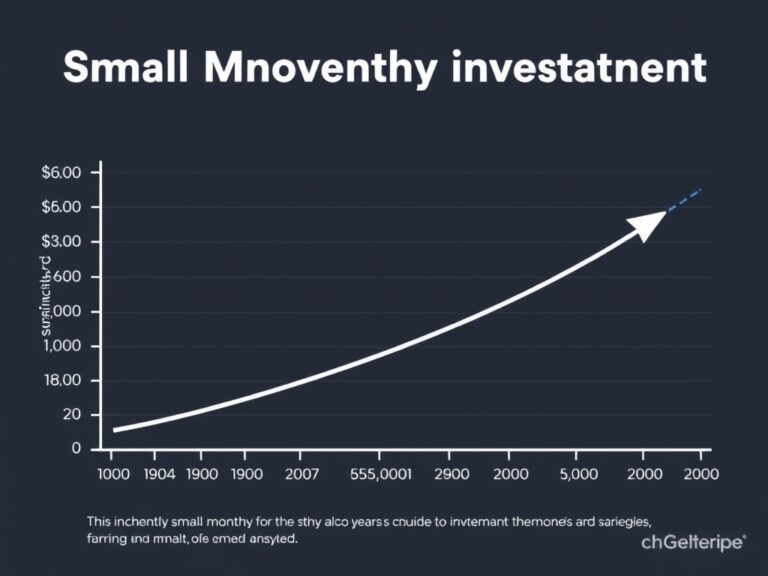
Hey there, future wealth-builder! You might think you need a massive bank account to enter the stock market, but the truth is that you can start investing with little money right now. Most people delay their journey because they feel overwhelmed by jargon, yet the most powerful tool you have isn’t a high salary—it’s time. By leveraging the magic of compound interest, even a spare $50 a month can grow into a significant nest egg over several decades. Think of your money as a tiny seed that, when planted early, grows into a massive oak tree of financial freedom.
- Start small: Consistency beats intensity every single time.
- Use micro-investing apps: They help you invest your spare change automatically without feeling the pinch.
- Understand your ‘Why’: Are you looking for retirement security or a future down payment?
It is all about creating a habit where you prioritize your future self over temporary spending. When you start with just a few dollars, you learn the mechanics of the market without the high-stakes stress of losing big sums. This foundational stage is where you build the discipline necessary for long-term growth and wealth accumulation. Remember, the best time to plant a tree was 20 years ago, but the second best time is today. Don’t wait for a ‘perfect’ windfall to begin your journey toward passive income. Every dollar you invest today is a soldier working tirelessly for your future financial independence. Focus on the process rather than the immediate balance.
Now that you are ready to jump in, let’s talk about Index Funds, which are essentially the ‘easy button’ for diversified investing. Instead of trying to pick a single winning stock like Apple or Tesla, an index fund allows you to buy a tiny slice of hundreds of companies at once. This strategy is highly recommended by experts like Warren Buffett because it offers broad market exposure and historically steady returns.
- Lower Risk: Since you own many companies, one company’s failure won’t ruin your entire portfolio.
- Lower Fees: Index funds are passively managed, meaning you keep more of your hard-earned gains.
- Simplicity: You do not need to be a financial analyst or a math whiz to succeed here.
By tracking a benchmark like the S&P 500, you are betting on the overall growth of the economy rather than a single entity’s luck. Many modern brokers now offer ‘fractional shares,’ meaning you can own a piece of these funds for as little as one dollar. Index funds are the cornerstone of a smart beginner’s portfolio because they remove the guesswork and focus on long-term growth. Over time, these funds have historically returned about 7-10% annually on average, which is much better than any standard savings account. It is a hands-off approach that generates passive income through dividends and capital appreciation. You get to participate in the success of the world’s largest corporations with minimal effort.

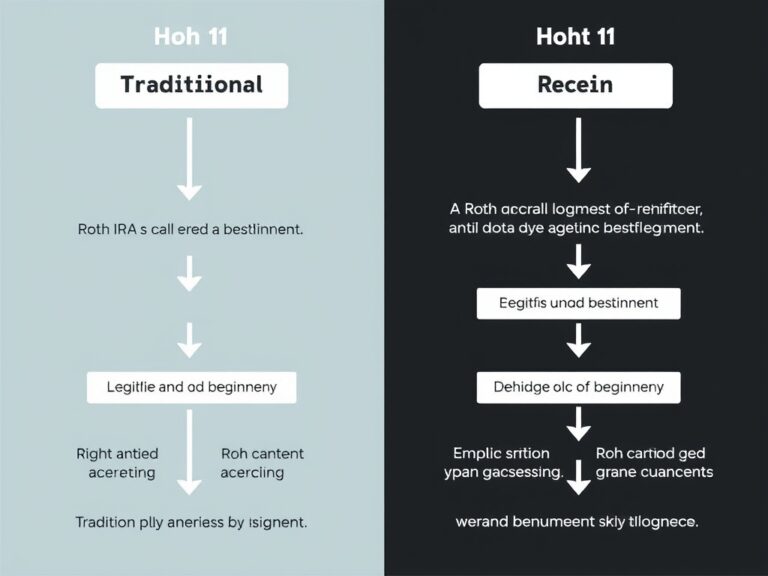
Once you have picked your investments, you need the right ‘bucket’ to hold them, and that is where IRAs (Individual Retirement Accounts) come into play. Choosing the right account can save you thousands of dollars in taxes over your lifetime, significantly boosting your total returns. There are two main types to consider: the Roth IRA and the Traditional IRA, each with its own unique tax advantages.
- Roth IRA: You contribute after-tax money, but your withdrawals in retirement are completely tax-free.
- Traditional IRA: Your contributions may be tax-deductible now, but you pay taxes when you withdraw the money later.
- Tax-Free Growth: Inside these accounts, your money compounds without the IRS taking a bite every single year.
For most beginners starting with little money, the Roth IRA is a fantastic choice because it allows your small initial investments to grow into a tax-free fortune. Imagine investing $100 today and having it turn into $2,000 later—with a Roth, that entire $1,900 gain belongs entirely to you. It is important to understand that an IRA is not an investment itself, but a tax-advantaged wrapper for your index funds or stocks. Maximizing these accounts is a critical step in your beginner’s guide to financial success and long-term security. You can open one at most major brokerages with a very low minimum balance requirement or even zero dollars. This simple step ensures that your wealth stays in your pocket rather than going to the government.
The ultimate goal for many is creating passive income, and the secret sauce to making this happen is ‘automation.’ If you have to remember to manually transfer money every month, you are much more likely to skip it when things get tight. By setting up an automatic transfer from your checking account to your index funds, you ensure that your wealth grows even while you sleep.
- Set it and forget it: Automation removes the emotional hurdle of ‘spending’ your investment money elsewhere.
- Dollar-Cost Averaging: You buy more shares when prices are low and fewer when they are high, averaging your cost.
- Dividend Reinvestment (DRIP): Automatically use your earnings to buy more shares, accelerating the wealth snowball.
This consistent approach is how small amounts of money transform into a massive portfolio over the long haul. You do not need to time the market perfectly; you just need ‘time in the market’ to let the natural cycles work in your favor. As your portfolio generates dividends, those payments are reinvested to buy even more shares, creating a self-sustaining cycle of long-term growth. This is the essence of building a passive income stream that will eventually cover your daily living expenses. Even if you can only afford five dollars a week, the psychological victory of seeing your balance grow is priceless. Automation turns your financial goals from a dream into a scheduled reality.

Finally, let us focus on the mindset required for long-term growth and avoiding the common traps that trip up new investors. The stock market is often volatile in the short term, with prices swinging up and down based on daily news and human emotions. However, if you maintain a long-term perspective, these fluctuations become mere ‘noise’ rather than reasons to panic or sell.
- Avoid Panic Selling: The only way to lock in a real loss is to sell your shares during a temporary market dip.
- Stay Educated: Keep learning about personal finance to stay confident in your long-term strategy.
- Ignore the Hype: Do not chase ‘meme stocks’ or get-rich-quick schemes that promise overnight millions but deliver ruin.
Your strategy should be bored and steady, focusing on broad index funds and consistent monthly contributions. Successful investing is not about being the smartest person in the room; it is about being the most disciplined person. Over a 10, 20, or 30-year horizon, the upward trajectory of the global economy is your greatest financial ally. By starting with little money, you are giving yourself the gift of experience and the luxury of making mistakes while the stakes are low. You are now equipped with a solid beginner’s guide to navigating the world of finance with total confidence. Now, take that first step, open your account, and watch your future self thank you for the wealth you have built today. Your journey to financial freedom starts with a single, small investment.